
Coverage Report
File SeqsetUtils.java
Coverage histogram
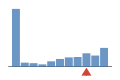
20% of files have more coverage
Classes
| Class | Line # | Actions | |||
|---|---|---|---|---|---|
| SeqsetUtils | 46 | 93 | 40 | ||
| SeqsetUtils.SequenceInfo | 48 | 3 | 1 |
Contributing tests
This file is covered by 105 tests.
.
Source view
| 1 | /* | |
| 2 | * Jalview - A Sequence Alignment Editor and Viewer ($$Version-Rel$$) | |
| 3 | * Copyright (C) $$Year-Rel$$ The Jalview Authors | |
| 4 | * | |
| 5 | * This file is part of Jalview. | |
| 6 | * | |
| 7 | * Jalview is free software: you can redistribute it and/or | |
| 8 | * modify it under the terms of the GNU General Public License | |
| 9 | * as published by the Free Software Foundation, either version 3 | |
| 10 | * of the License, or (at your option) any later version. | |
| 11 | * | |
| 12 | * Jalview is distributed in the hope that it will be useful, but | |
| 13 | * WITHOUT ANY WARRANTY; without even the implied warranty | |
| 14 | * of MERCHANTABILITY or FITNESS FOR A PARTICULAR | |
| 15 | * PURPOSE. See the GNU General Public License for more details. | |
| 16 | * | |
| 17 | * You should have received a copy of the GNU General Public License | |
| 18 | * along with Jalview. If not, see <http://www.gnu.org/licenses/>. | |
| 19 | * The Jalview Authors are detailed in the 'AUTHORS' file. | |
| 20 | */ | |
| 21 | package jalview.analysis; | |
| 22 | ||
| 23 | import jalview.bin.Cache; | |
| 24 | import jalview.bin.Console; | |
| 25 | import jalview.datamodel.AlignmentAnnotation; | |
| 26 | import jalview.datamodel.HiddenMarkovModel; | |
| 27 | import jalview.datamodel.PDBEntry; | |
| 28 | import jalview.datamodel.Sequence; | |
| 29 | import jalview.datamodel.SequenceFeature; | |
| 30 | import jalview.datamodel.SequenceI; | |
| 31 | ||
| 32 | import java.util.ArrayList; | |
| 33 | import java.util.BitSet; | |
| 34 | import java.util.Enumeration; | |
| 35 | import java.util.HashMap; | |
| 36 | import java.util.Hashtable; | |
| 37 | import java.util.Iterator; | |
| 38 | import java.util.List; | |
| 39 | import java.util.Map; | |
| 40 | import java.util.Optional; | |
| 41 | import java.util.Vector; | |
| 42 | import static java.lang.String.format; | |
| 43 | ||
| 44 | import java.nio.CharBuffer; | |
| 45 | ||
| 46 | public class SeqsetUtils | |
| 47 | { | |
| 48 | public static class SequenceInfo { | |
| 49 | private String name; | |
| 50 | private int start; | |
| 51 | private int end; | |
| 52 | private Optional<String> description = Optional.empty(); | |
| 53 | private Optional<List<SequenceFeature>> features = Optional.empty(); | |
| 54 | private Optional<List<PDBEntry>> pdbId = Optional.empty(); | |
| 55 | private Optional<SequenceI> dataset = Optional.empty(); | |
| 56 | private Optional<HiddenMarkovModel> hmm = Optional.empty(); | |
| 57 | private Optional<AlignmentAnnotation[]> searchScores = Optional.empty(); | |
| 58 | ||
| 59 | 493 |  private SequenceInfo(String name, int start, int end) { private SequenceInfo(String name, int start, int end) { |
| 60 | 493 | this.name = name; |
| 61 | 493 | this.start = start; |
| 62 | 493 | this.end = end; |
| 63 | } | |
| 64 | } | |
| 65 | ||
| 66 | /** | |
| 67 | * Store essential properties of a sequence in a hashtable for later recovery | |
| 68 | * Keys are Name, Start, End, SeqFeatures, PdbId, HMM | |
| 69 | * | |
| 70 | * @param seq | |
| 71 | * SequenceI | |
| 72 | * @return Hashtable | |
| 73 | */ | |
| 74 | 493 | public static SequenceInfo SeqCharacterHash(SequenceI seq) |
| 75 | { | |
| 76 | 493 | SequenceInfo sqinfo = new SequenceInfo(seq.getName(), seq.getStart(), seq.getEnd()); |
| 77 | 493 | sqinfo.description = Optional.ofNullable(seq.getDescription()); |
| 78 | 493 | sqinfo.dataset = Optional.ofNullable(seq.getDatasetSequence()); |
| 79 | 493 | if (!sqinfo.dataset.isPresent()) |
| 80 | { | |
| 81 | 134 | ArrayList<SequenceFeature> feats = new ArrayList<>( |
| 82 | seq.getFeatures().getAllFeatures()); | |
| 83 | 134 | sqinfo.features = Optional.of(feats); |
| 84 | 134 | var pdbEntries = seq.getAllPDBEntries(); |
| 85 | 134 | sqinfo.pdbId = Optional.of(pdbEntries != null ? pdbEntries : new ArrayList<>()); |
| 86 | } | |
| 87 | 493 | if (seq.hasHMMProfile()) |
| 88 | { | |
| 89 | 0 | sqinfo.hmm = Optional.of(seq.getHMM()); |
| 90 | } | |
| 91 | 493 | sqinfo.searchScores = Optional.ofNullable(seq.getAnnotation("Search Scores")); |
| 92 | 493 | return sqinfo; |
| 93 | } | |
| 94 | ||
| 95 | /** | |
| 96 | * Filter the sequence through the mask leaving only characters at positions | |
| 97 | * where the mask value was true. The length of the resulting array is | |
| 98 | * the cardinality of the mask from 0 to sequence length. | |
| 99 | * | |
| 100 | * @param sequence | |
| 101 | * input sequence | |
| 102 | * @param mask | |
| 103 | * mask used to filter the sequence characters | |
| 104 | * @return input array filtered through the mask | |
| 105 | */ | |
| 106 | 43 | public static char[] filterSequence(char[] sequence, BitSet mask) |
| 107 | { | |
| 108 | 43 | mask = mask.get(0, sequence.length); |
| 109 | 43 | char[] result = new char[mask.cardinality()]; |
| 110 | 493 | for (int i = mask.nextSetBit(0), j = 0; i >= 0;) |
| 111 | { | |
| 112 | 450 | result[j++] = sequence[i]; |
| 113 | 450 | if (i == Integer.MAX_VALUE) |
| 114 | // prevents integer overflow of (i + 1) | |
| 115 | 0 | break; |
| 116 | 450 | i = mask.nextSetBit(i + 1); |
| 117 | } | |
| 118 | 43 | return result; |
| 119 | } | |
| 120 | ||
| 121 | /** | |
| 122 | * Recover essential properties of a sequence from a hashtable TODO: replace | |
| 123 | * these methods with something more elegant. | |
| 124 | * | |
| 125 | * @param sq | |
| 126 | * SequenceI | |
| 127 | * @param sqinfo | |
| 128 | * Hashtable | |
| 129 | * @return boolean true if name was not updated from sqinfo Name entry | |
| 130 | */ | |
| 131 | 325 | public static boolean SeqCharacterUnhash(SequenceI sq, SequenceInfo sqinfo) |
| 132 | { | |
| 133 | 325 | if (sqinfo == null) |
| 134 | { | |
| 135 | 0 | return false; |
| 136 | } | |
| 137 | 325 | if (sqinfo.name != null) |
| 138 | { | |
| 139 | 325 | sq.setName(sqinfo.name); |
| 140 | } | |
| 141 | 325 | sq.setStart(sqinfo.start); |
| 142 | 325 | sq.setEnd(sqinfo.end); |
| 143 | 325 | if (sqinfo.pdbId.isPresent() && !sqinfo.pdbId.get().isEmpty()) |
| 144 | 0 | sq.setPDBId(new Vector<>(sqinfo.pdbId.get())); |
| 145 | 325 | if (sqinfo.features.isPresent() && !sqinfo.features.get().isEmpty()) |
| 146 | 0 | sq.setSequenceFeatures(sqinfo.features.get()); |
| 147 | 325 | if (sqinfo.description.isPresent()) |
| 148 | 4 | sq.setDescription(sqinfo.description.get()); |
| 149 | 325 | if (sqinfo.dataset.isPresent()) |
| 150 | { | |
| 151 | 197 | if (sqinfo.features.isPresent()) |
| 152 | { | |
| 153 | 0 | Console.warn("Setting dataset sequence for a sequence which has " + |
| 154 | "sequence features. Dataset sequence features will not be visible."); | |
| 155 | assert false; | |
| 156 | } | |
| 157 | 197 | sq.setDatasetSequence(sqinfo.dataset.get()); |
| 158 | } | |
| 159 | 325 | if (sqinfo.hmm.isPresent()) |
| 160 | 0 | sq.setHMM(new HiddenMarkovModel(sqinfo.hmm.get(), sq)); |
| 161 | 325 | if (sqinfo.searchScores.isPresent()) |
| 162 | { | |
| 163 | 0 | for (AlignmentAnnotation score : sqinfo.searchScores.get()) |
| 164 | { | |
| 165 | 0 | sq.addAlignmentAnnotation(score); |
| 166 | } | |
| 167 | } | |
| 168 | 325 | return sqinfo.name != null; |
| 169 | } | |
| 170 | ||
| 171 | /** | |
| 172 | * Form of the unique name used in uniquify for the i'th sequence in an | |
| 173 | * ordered vector of sequences. | |
| 174 | * | |
| 175 | * @param i | |
| 176 | * int | |
| 177 | * @return String | |
| 178 | */ | |
| 179 | 252 | public static String unique_name(int i) |
| 180 | { | |
| 181 | 252 | return String.format("Sequence%d", i); |
| 182 | } | |
| 183 | ||
| 184 | /** | |
| 185 | * Generates a hash of SeqCharacterHash properties for each sequence in a | |
| 186 | * sequence set, and optionally renames the sequences to an unambiguous 'safe' | |
| 187 | * name. | |
| 188 | * | |
| 189 | * @param sequences | |
| 190 | * SequenceI[] | |
| 191 | * @param write_names | |
| 192 | * boolean set this to rename each of the sequences to its | |
| 193 | * unique_name(index) name | |
| 194 | * @return Hashtable to be passed to | |
| 195 | * @see deuniquify to recover original names (and properties) for renamed | |
| 196 | * sequences | |
| 197 | */ | |
| 198 | 14 | public static Map<String, SequenceInfo> uniquify(SequenceI[] sequences, |
| 199 | boolean write_names) | |
| 200 | { | |
| 201 | // Generate a safely named sequence set and a hash to recover the sequence | |
| 202 | // names | |
| 203 | 14 | HashMap<String, SequenceInfo> map = new HashMap<>(); |
| 204 | // String[] un_names = new String[sequences.length]; | |
| 205 | ||
| 206 | 142 | for (int i = 0; i < sequences.length; i++) |
| 207 | { | |
| 208 | 128 | String safename = unique_name(i); |
| 209 | 128 | map.put(safename, SeqCharacterHash(sequences[i])); |
| 210 | ||
| 211 | 128 | if (write_names) |
| 212 | { | |
| 213 | 128 | sequences[i].setName(safename); |
| 214 | } | |
| 215 | } | |
| 216 | ||
| 217 | 14 | return map; |
| 218 | } | |
| 219 | ||
| 220 | /** | |
| 221 | * recover unsafe sequence names and original properties for a sequence set | |
| 222 | * using a map generated by | |
| 223 | * | |
| 224 | * @see uniquify(sequences,true) | |
| 225 | * @param map | |
| 226 | * Hashtable | |
| 227 | * @param sequences | |
| 228 | * SequenceI[] | |
| 229 | * @return boolean | |
| 230 | */ | |
| 231 | 9 | public static boolean deuniquify(Map<String, SequenceInfo> map, |
| 232 | SequenceI[] sequences) | |
| 233 | { | |
| 234 | 9 | return deuniquify(map, sequences, true); |
| 235 | } | |
| 236 | ||
| 237 | /** | |
| 238 | * recover unsafe sequence names and original properties for a sequence set | |
| 239 | * using a map generated by | |
| 240 | * | |
| 241 | * @see uniquify(sequences,true) | |
| 242 | * @param map | |
| 243 | * Hashtable | |
| 244 | * @param sequences | |
| 245 | * SequenceI[] | |
| 246 | * @param quiet | |
| 247 | * when false, don't complain about sequences without any data in the | |
| 248 | * map. | |
| 249 | * @return boolean | |
| 250 | */ | |
| 251 | 9 | public static boolean deuniquify(Map<String, SequenceInfo> map, |
| 252 | SequenceI[] sequences, boolean quiet) | |
| 253 | { | |
| 254 | 9 | jalview.analysis.SequenceIdMatcher matcher = new SequenceIdMatcher( |
| 255 | sequences); | |
| 256 | 9 | SequenceI msq = null; |
| 257 | 9 | Iterator<String> keys = map.keySet().iterator(); |
| 258 | 9 | Vector<SequenceI> unmatched = new Vector<>(); |
| 259 | 35 | for (int i = 0, j = sequences.length; i < j; i++) |
| 260 | { | |
| 261 | 26 | unmatched.addElement(sequences[i]); |
| 262 | } | |
| 263 | 35 | while (keys.hasNext()) |
| 264 | { | |
| 265 | 26 | String key = keys.next(); |
| 266 | 26 | try { |
| 267 | ? | if ((msq = matcher.findIdMatch((String) key)) != null) |
| 268 | { | |
| 269 | 26 | SequenceInfo sqinfo = map.get(key); |
| 270 | 26 | unmatched.removeElement(msq); |
| 271 | 26 | SeqCharacterUnhash(msq, sqinfo); |
| 272 | } | |
| 273 | else | |
| 274 | { | |
| 275 | 0 | if (!quiet) |
| 276 | { | |
| 277 | 0 | Console.warn(format("Can't find '%s' in uniquified alignment", |
| 278 | key)); | |
| 279 | } | |
| 280 | } | |
| 281 | } catch (ClassCastException ccastex) { | |
| 282 | 0 | if (!quiet) |
| 283 | { | |
| 284 | 0 | Console.error("Unexpected object in SeqSet map : "+ key.getClass()); |
| 285 | } | |
| 286 | } | |
| 287 | } | |
| 288 | 9 | if (unmatched.size() > 0 && !quiet) |
| 289 | { | |
| 290 | 0 | StringBuilder sb = new StringBuilder("Did not find match for sequences: "); |
| 291 | 0 | Enumeration<SequenceI> i = unmatched.elements(); |
| 292 | 0 | sb.append(i.nextElement().getName()); |
| 293 | 0 | for (; i.hasMoreElements();) |
| 294 | { | |
| 295 | 0 | sb.append(", " + i.nextElement().getName()); |
| 296 | } | |
| 297 | 0 | Console.warn(sb.toString()); |
| 298 | 0 | return false; |
| 299 | } | |
| 300 | ||
| 301 | 9 | return true; |
| 302 | } | |
| 303 | ||
| 304 | /** | |
| 305 | * returns a subset of the sequenceI seuqences, including only those that | |
| 306 | * contain at least one residue. | |
| 307 | * | |
| 308 | * @param sequences | |
| 309 | * SequenceI[] | |
| 310 | * @return SequenceI[] | |
| 311 | */ | |
| 312 | 10 | public static SequenceI[] getNonEmptySequenceSet(SequenceI[] sequences) |
| 313 | { | |
| 314 | // Identify first row of alignment with residues for prediction | |
| 315 | 10 | boolean ungapped[] = new boolean[sequences.length]; |
| 316 | 10 | int msflen = 0; |
| 317 | 37 | for (int i = 0, j = sequences.length; i < j; i++) |
| 318 | { | |
| 319 | 27 | String tempseq = jalview.analysis.AlignSeq.extractGaps( |
| 320 | jalview.util.Comparison.GapChars, | |
| 321 | sequences[i].getSequenceAsString()); | |
| 322 | ||
| 323 | 27 | if (tempseq.length() == 0) |
| 324 | { | |
| 325 | 1 | ungapped[i] = false; |
| 326 | } | |
| 327 | else | |
| 328 | { | |
| 329 | 26 | ungapped[i] = true; |
| 330 | 26 | msflen++; |
| 331 | } | |
| 332 | } | |
| 333 | 10 | if (msflen == 0) |
| 334 | { | |
| 335 | 0 | return null; // no minimal set |
| 336 | } | |
| 337 | // compose minimal set | |
| 338 | 10 | SequenceI[] mset = new SequenceI[msflen]; |
| 339 | 37 | for (int i = 0, j = sequences.length, k = 0; i < j; i++) |
| 340 | { | |
| 341 | 27 | if (ungapped[i]) |
| 342 | { | |
| 343 | 26 | mset[k++] = sequences[i]; |
| 344 | } | |
| 345 | } | |
| 346 | 10 | ungapped = null; |
| 347 | 10 | return mset; |
| 348 | } | |
| 349 | } |