
Coverage Report
File Async.java
Coverage histogram
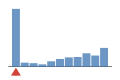
60% of files have more coverage
Classes
| Class | Line # | Actions | |||
|---|---|---|---|---|---|
| Async | 169 | 4 | 4 |
Contributing tests
Source view
| 1 | package javajs.async; | |
| 2 | ||
| 3 | /** | |
| 4 | * A package to manage asynchronous aspects of SwingJS | |
| 5 | * | |
| 6 | * The javajs.async package simplifies the production of methods that can be | |
| 7 | * used equally well in Java and in JavaScript for handling "pseudo-modal" | |
| 8 | * blocking in JavaScript, meaning the user is locked out of other interactions, | |
| 9 | * as in Java, but the code is not actually blocking the thread. | |
| 10 | * | |
| 11 | * Included in this package are | |
| 12 | * | |
| 13 | * Async | |
| 14 | * | |
| 15 | * Provides few simple generic static methods. | |
| 16 | * | |
| 17 | * Async.isJS() -- true if we are running this in JavaScript | |
| 18 | * | |
| 19 | * Async.javaSleep() -- bypassing Thread.sleep() for JavaScript; allowing it for | |
| 20 | * Java | |
| 21 | * | |
| 22 | * | |
| 23 | * AsyncDialog | |
| 24 | * | |
| 25 | * Provides several very useful methods that act as a replacement for direct | |
| 26 | * JOptionPane or JDialog calls, including both a synchronous callback | |
| 27 | * (manifested in Java) and an asynchronous callback (JavaScript), both | |
| 28 | * resulting in the same effect, except for the fact that the JavaScript code | |
| 29 | * has returned immediately from the call with an "ignore me" reference, while | |
| 30 | * Java is waiting at that call to return a value from JOptionPane (which is | |
| 31 | * saved by AsyncDialog and not delivered as a return value). | |
| 32 | * | |
| 33 | * AsyncDialog does not extend JOptionPane, but it mirrors that classes public | |
| 34 | * methods. There are a LOT of public methods in JOPtionPane. I suppose we | |
| 35 | * should implement them all. In practice, AsyncDialog calls standard | |
| 36 | * JOptionPane static classes for the dialogs. | |
| 37 | * | |
| 38 | * Initially, the following methods are implemented: | |
| 39 | * | |
| 40 | * public void showConfirmDialog(Component frame, Object message, String title, | |
| 41 | * ActionListener a) | |
| 42 | * | |
| 43 | * public void showConfirmDialog(Component frame, Object message, String title, | |
| 44 | * int optionType, ActionListener a) | |
| 45 | * | |
| 46 | * public void showConfirmDialog(Component frame, Object message, String title, | |
| 47 | * int optionType, int messageType, ActionListener a) | |
| 48 | * | |
| 49 | * public void showInputDialog(Component frame, Object message, ActionListener | |
| 50 | * a) | |
| 51 | * | |
| 52 | * public void showInputDialog(Component frame, Object message, String title, | |
| 53 | * int messageType, Icon icon, Object[] selectionValues, Object | |
| 54 | * initialSelectionValue, ActionListener a) | |
| 55 | * | |
| 56 | * public void showMessageDialog(Component frame, Object message, ActionListener | |
| 57 | * a) | |
| 58 | * | |
| 59 | * public void showOptionDialog(Component frame, Object message, String title, | |
| 60 | * int optionType, int messageType, Icon icon, Object[] options, Object | |
| 61 | * initialValue, ActionListener a) | |
| 62 | * | |
| 63 | * | |
| 64 | * All nonstatic methods, requiring new AsyncDialog(), also require an | |
| 65 | * ActionListener. This listener will get a call to actionPerformed(ActionEvent) | |
| 66 | * where: | |
| 67 | * | |
| 68 | * event.getSource() is a reference to the originating AsyncDialog (super | |
| 69 | * JOptionPane) for all information that a standard JOptionPane can provide, | |
| 70 | * along with the two methods int getOption() and Object getChoice(). | |
| 71 | * | |
| 72 | * event.getID() is a reference to the standard JOptionPane int return code. | |
| 73 | * | |
| 74 | * event.getActionCommand() also holds a value, but it may or may not be of | |
| 75 | * value. | |
| 76 | * | |
| 77 | * | |
| 78 | * A few especially useful methods are static, allowing just one or two expected | |
| 79 | * callbacks of interest: | |
| 80 | * | |
| 81 | * AsyncDialog.showOKAsync(Component parent, Object message, String title, | |
| 82 | * Runnable ok) | |
| 83 | * | |
| 84 | * AsyncDialog.showYesAsync (Component parent, Object message, String title, | |
| 85 | * Runnable yes) | |
| 86 | * | |
| 87 | * AsyncDialog.showYesNoAsync (Component parent, Object message, String title, | |
| 88 | * Runnable yes, Runnable no) | |
| 89 | * | |
| 90 | * These methods provide a fast way to adjust JOptionPane calls to be | |
| 91 | * asynchronous. | |
| 92 | * | |
| 93 | * | |
| 94 | * | |
| 95 | * AsyncFileChooser extends javax.swing.JFileChooser | |
| 96 | * | |
| 97 | * Accepted constructors include: | |
| 98 | * | |
| 99 | * public AsyncFileChooser() | |
| 100 | * | |
| 101 | * public AsyncFileChooser(File file) | |
| 102 | * | |
| 103 | * public AsyncFileChooser(File file, FileSystemView view) | |
| 104 | * | |
| 105 | * (Note, however, that FileSystemView has no equivalent in JavaScript.) | |
| 106 | * | |
| 107 | * It's three public methods include: | |
| 108 | * | |
| 109 | * public void showDialog(Component frame, String btnLabel, Runnable ok, | |
| 110 | * Runnable cancel) | |
| 111 | * | |
| 112 | * public void showOpenDialog(Component frame, Runnable ok, Runnable cancel) | |
| 113 | * | |
| 114 | * public void showSaveDialog(Component frame, Runnable ok, Runnable cancel) | |
| 115 | * | |
| 116 | * | |
| 117 | * ActionListener is not needed here, as the instance of new AsyncFileChooser() | |
| 118 | * already has direct access to all the JFileChooser public methods such as | |
| 119 | * getSelectedFile() and getSelectedFiles(). | |
| 120 | * | |
| 121 | * As a subclass of JFileChooser, it accepts all three public showXXXX methods | |
| 122 | * of JFileChooser, namely: | |
| 123 | * | |
| 124 | * public void showDialog(Component frame, String btnLabel) | |
| 125 | * | |
| 126 | * public void showOpenDialog(Component frame) | |
| 127 | * | |
| 128 | * public void showSaveDialog(Component frame) | |
| 129 | * | |
| 130 | * | |
| 131 | * None of these are recommended. AsyncFileChooser will indicate errors if the | |
| 132 | * first of these two are called. (showSaveDialog is fine, as it is modal even | |
| 133 | * in JavaScript. However it is not recommended that showSaveDialog(Component | |
| 134 | * frame) be used, as in the future browsers may implement some sort of file | |
| 135 | * saver in HTML5. | |
| 136 | * | |
| 137 | * | |
| 138 | * | |
| 139 | * AsyncColorChooser | |
| 140 | * | |
| 141 | * | |
| 142 | * AsyncColorChooser accesses JColorChooser asynchronously, using a private | |
| 143 | * SwingJS setting that tells JColorChooser to report back to it with property | |
| 144 | * changes. It is constructed using new AsyncColorChooser() and implements just | |
| 145 | * two methods: | |
| 146 | * | |
| 147 | * public void showDialog(Component component, String title, Color initialColor, | |
| 148 | * ActionListener listener) | |
| 149 | * | |
| 150 | * public Color getSelectedColor() | |
| 151 | * | |
| 152 | * | |
| 153 | * The listener will get an actionPerformed(ActionEvent) callback with | |
| 154 | * event.getID() equal to the color value or 0 if canceled. The | |
| 155 | * getSelectedColor() method may also be called from this callback to retrieve | |
| 156 | * the associated java.awt.Color object, using | |
| 157 | * | |
| 158 | * ((AsyncColorChooser)e.getSource()).getSelectedColor() | |
| 159 | * | |
| 160 | * As in Java, a null value for the selected color indicates that the | |
| 161 | * JColorChooser was closed. | |
| 162 | * | |
| 163 | * Bob Hanson 2019.11.07 | |
| 164 | * | |
| 165 | * | |
| 166 | * @author Bob Hanson hansonr_at_stolaf.edu | |
| 167 | * | |
| 168 | */ | |
| 169 | public class Async { | |
| 170 | ||
| 171 | 0 |  public static boolean isJS() { public static boolean isJS() { |
| 172 | 0 | return (/** @j2sNative 1 ? true : */false); |
| 173 | } | |
| 174 | ||
| 175 | /** | |
| 176 | * No sleep in JavaScript | |
| 177 | * @param ms | |
| 178 | */ | |
| 179 | 0 | public static void javaSleep(int ms) { |
| 180 | 0 | if (!isJS()) { |
| 181 | 0 | try { |
| 182 | 0 | Thread.sleep(ms); |
| 183 | } catch (InterruptedException e) { | |
| 184 | } | |
| 185 | } | |
| 186 | ||
| 187 | } | |
| 188 | ||
| 189 | } |