
Coverage Report
File Validator.java
Coverage histogram
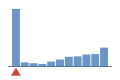
60% of files have more coverage
Classes
| Class | Line # | Actions | |||
|---|---|---|---|---|---|
| Validator | 17 | 4 | 4 |
Contributing tests
Source view
| 1 | // | |
| 2 | // This software is now distributed according to | |
| 3 | // the Lesser Gnu Public License. Please see | |
| 4 | // http://www.gnu.org/copyleft/lesser.txt for | |
| 5 | // the details. | |
| 6 | // -- Happy Computing! | |
| 7 | // | |
| 8 | package com.stevesoft.pat; | |
| 9 | ||
| 10 | /** | |
| 11 | * This class makes it easy to create your own patterns and integrate them into | |
| 12 | * Regex. For more detail, see the example file | |
| 13 | * <a href="http://javaregex.com/code/deriv2.java.html">deriv2.java</a> or | |
| 14 | * <a href="http://javaregex.com/code/deriv3.java.html">deriv3.java</a>. | |
| 15 | */ | |
| 16 | ||
| 17 | public class Validator | |
| 18 | { | |
| 19 | String argsave = null; | |
| 20 | ||
| 21 | String pattern = "."; | |
| 22 | ||
| 23 | /** | |
| 24 | * This method does extra checking on a matched section of a String beginning | |
| 25 | * at position start and ending at end. The idea is that you can do extra | |
| 26 | * checking with this that you don't know how to do with a standard Regex. | |
| 27 | * | |
| 28 | * If this method is successful, it returns the location of the end of this | |
| 29 | * pattern element -- that may be the value end provided or some other value. | |
| 30 | * A negative value signifies that a match failure. | |
| 31 | * | |
| 32 | * By default, this method just returns end and thus does nothing. | |
| 33 | * | |
| 34 | * @see com.stevesoft.pat.Regex#define(java.lang.String,java.lang.String,com.stevesoft.pat.Validator) | |
| 35 | */ | |
| 36 | 0 |  public int validate(StringLike src, int start, int end) public int validate(StringLike src, int start, int end) |
| 37 | { | |
| 38 | 0 | return end; |
| 39 | } | |
| 40 | ||
| 41 | /* | |
| 42 | * This method allows you to modify the behavior of this validator by making a | |
| 43 | * new Validator object. If a Validator named "foo" is defined, then the | |
| 44 | * pattern "{??foo:bar}" will cause Regex to first get the Validator given to | |
| 45 | * Regex.define and then to call its arg method with the string "bar". If this | |
| 46 | * method returns a null (the default) you get the same behavior as the | |
| 47 | * pattern "{??foo}" would supply. | |
| 48 | */ | |
| 49 | 0 | public Validator arg(String s) |
| 50 | { | |
| 51 | 0 | return null; |
| 52 | } | |
| 53 | ||
| 54 | /** | |
| 55 | * For optimization it is helpful, but not necessary, that you define the | |
| 56 | * minimum number of characters this validator will allow to match. To do this | |
| 57 | * return new patInt(number) where number is the smallest number of characters | |
| 58 | * that can match. | |
| 59 | */ | |
| 60 | 0 | public patInt minChars() |
| 61 | { | |
| 62 | 0 | return new patInt(0); |
| 63 | } | |
| 64 | ||
| 65 | /** | |
| 66 | * For optimization it is helpful, but not necessary, that you define the | |
| 67 | * maximum number of characters this validator will allow to match. To do this | |
| 68 | * either return new patInt(number), or new patInf() if an infinite number of | |
| 69 | * characters may match. | |
| 70 | */ | |
| 71 | 0 | public patInt maxChars() |
| 72 | { | |
| 73 | 0 | return new patInf(); |
| 74 | } | |
| 75 | } |