
Coverage Report
File PartialBuffer.java
Coverage histogram
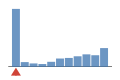
59% of files have more coverage
Classes
| Class | Line # | Actions | |||
|---|---|---|---|---|---|
| PartialBuffer | 46 | 17 | 12 |
Contributing tests
Source view
| 1 | // | |
| 2 | // This software is now distributed according to | |
| 3 | // the Lesser Gnu Public License. Please see | |
| 4 | // http://www.gnu.org/copyleft/lesser.txt for | |
| 5 | // the details. | |
| 6 | // -- Happy Computing! | |
| 7 | // | |
| 8 | package com.stevesoft.pat; | |
| 9 | ||
| 10 | /** | |
| 11 | * This class allows you to match on a partial string. If the allowOverRun flag | |
| 12 | * is true, then the length() method returns a number 1 larger than is actually | |
| 13 | * contained by the class. | |
| 14 | * <p> | |
| 15 | * If one attempts to access the last character as follows: | |
| 16 | * | |
| 17 | * <pre> | |
| 18 | * StringBuffer sb = ...; | |
| 19 | * ... | |
| 20 | * PartialBuffer pb = new PartialBuffer(sb); | |
| 21 | * char c = pb.charAt(pb.length()-1); | |
| 22 | * </pre> | |
| 23 | * | |
| 24 | * then two things happen. First, a zero is returned into the variable c. | |
| 25 | * Second, the overRun flag is set to "true." Accessing data beyond the end of | |
| 26 | * the buffer is considered an "overRun" of the data. | |
| 27 | * <p> | |
| 28 | * This can be helpful in determining whether more characters are required for a | |
| 29 | * match to occur, as the pseudo-code below illustrates. | |
| 30 | * | |
| 31 | * <pre> | |
| 32 | * int i = ...; | |
| 33 | * Regex r = new Regex("some pattern"); | |
| 34 | * pb.allowOverRun = true; | |
| 35 | * pb.overRun = true; | |
| 36 | * boolean result = r.matchAt(pb,i); | |
| 37 | * if(pb.overRun) { | |
| 38 | * // The result of the match is not relevant, regardless | |
| 39 | * // of whether result is true or false. We need to | |
| 40 | * // append more data to the buffer and try again. | |
| 41 | * .... | |
| 42 | * sb.append(more data); | |
| 43 | * } | |
| 44 | * </pre> | |
| 45 | */ | |
| 46 | class PartialBuffer implements StringLike | |
| 47 | { | |
| 48 | int off; | |
| 49 | ||
| 50 | public boolean allowOverRun = true; | |
| 51 | ||
| 52 | public boolean overRun = false; | |
| 53 | ||
| 54 | StringBuffer sb; | |
| 55 | ||
| 56 | 0 |  PartialBuffer(StringBuffer sb) PartialBuffer(StringBuffer sb) |
| 57 | { | |
| 58 | 0 | this.sb = sb; |
| 59 | } | |
| 60 | ||
| 61 | 0 | public char charAt(int n) |
| 62 | { | |
| 63 | 0 | n += off; |
| 64 | 0 | if (n == sb.length()) |
| 65 | { | |
| 66 | 0 | overRun = true; |
| 67 | 0 | return 0; |
| 68 | } | |
| 69 | 0 | return sb.charAt(n); |
| 70 | } | |
| 71 | ||
| 72 | 0 | public int length() |
| 73 | { | |
| 74 | 0 | return allowOverRun ? sb.length() + 1 : sb.length(); |
| 75 | } | |
| 76 | ||
| 77 | 0 | public int indexOf(char c) |
| 78 | { | |
| 79 | 0 | for (int i = 0; i < sb.length(); i++) |
| 80 | { | |
| 81 | 0 | if (sb.charAt(i) == c) |
| 82 | { | |
| 83 | 0 | return i; |
| 84 | } | |
| 85 | } | |
| 86 | 0 | return -1; |
| 87 | } | |
| 88 | ||
| 89 | 0 | public Object unwrap() |
| 90 | { | |
| 91 | 0 | return sb; |
| 92 | } | |
| 93 | ||
| 94 | 0 | public String substring(int i1, int i2) |
| 95 | { | |
| 96 | 0 | StringBuffer sb = new StringBuffer(i2 - i1); |
| 97 | 0 | for (int i = i1; i < i2; i++) |
| 98 | { | |
| 99 | 0 | sb.append(charAt(i)); |
| 100 | } | |
| 101 | 0 | return sb.toString(); |
| 102 | } | |
| 103 | ||
| 104 | /** Just returns null. */ | |
| 105 | 0 | public BasicStringBufferLike newStringBufferLike() |
| 106 | { | |
| 107 | 0 | return null; |
| 108 | } | |
| 109 | } |